
Every parent wants to see their child succeed in school, raising a hand to answer questions, reading confidently aloud, and coming home with a smile instead of tears. But when your child has dyslexia, the classroom can sometimes feel like an obstacle to progress.
- Letters flip
- Words blur together
- Reading out loud
Becomes a source of fear, rather than pride.
Here’s the truth no one tells you early enough: Dyslexia has nothing to do with intelligence. Many of the world’s most creative, capable, and successful people, from scientists to entrepreneurs to artists, are dyslexic. What makes the difference is early support, the right strategies, and a community that actually understands what your child needs.
If you’re wondering how to help your child with dyslexia in school life, this guide is for you.
START WITH UNDERSTANDING - NOT LABELS
Before skipping to interventions, it helps to understand what dyslexia actually is. Dyslexia is a neurological learning difference that affects how the brain processes written language. It’s not idleness. It’s not a lack of trying. Children with dyslexia often work twice as hard as their peers to interpret words that others read readily.
When you approach your child’s challenges with understanding first, you create the emotional safety they need to keep trying. Talk to them about how their brain works differently, not worse, just differently. Books like The Dyslexic Advantage or age- appropriate resources can help both of you reframe dyslexia as a difference worth understanding.
WORK CLOSELY WITH THE SCHOOL
One of the most powerful things a parent can do is become their child’s activist inside the school system. Request a formal evaluation if dyslexia has not been analysed yet. Once analysed, work with teachers and administrators to develop an Individualized Education Plan (IEP) or a 504 Plan that gives your child legal accommodations, such as extra time on tests, the option to respond verbally, or access to audiobooks.
Be consistent in your communication. Check in with teachers frequently, not just during report card season. Ask what’s working and what isn’t. Teachers often have more flexibility than they let on, and a combined parent-teacher relationship can expose creative solutions that wouldn’t happen otherwise.
USE MULTI-SENSORY LEARNING AT HOME
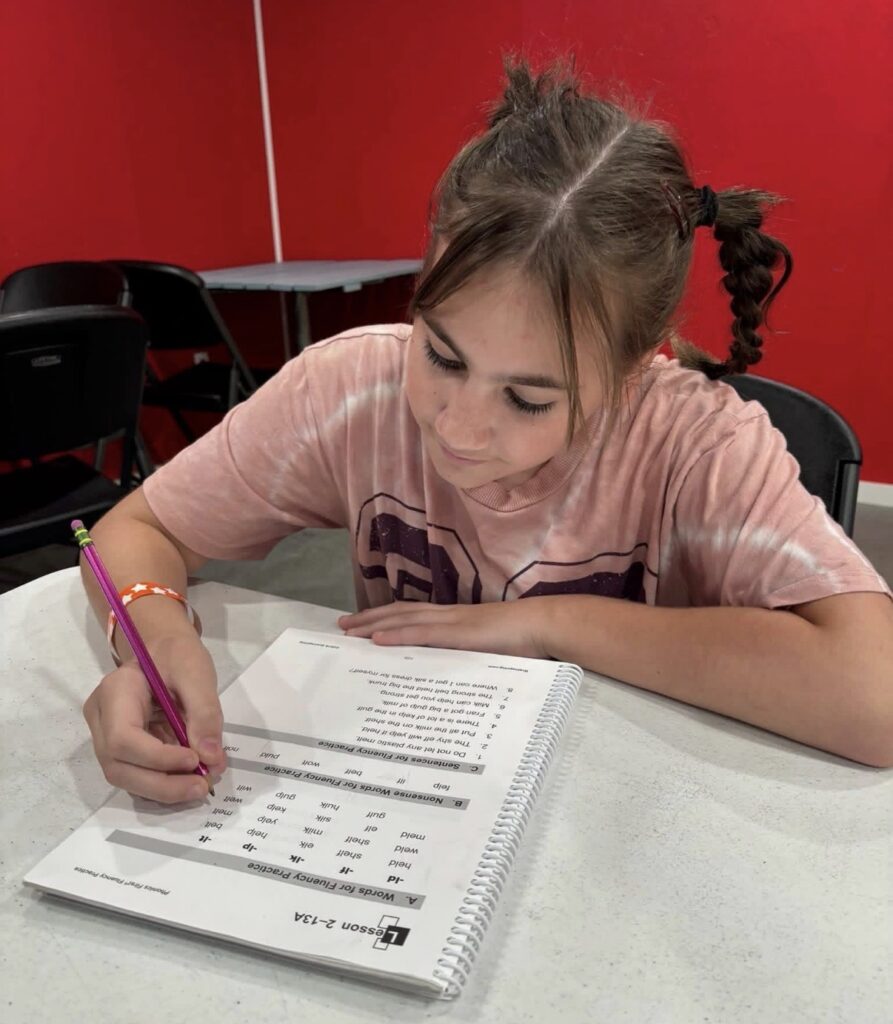
Children with dyslexia tend to respond attractively to multi-sensory learning approaches that engage sight, sound, touch, and movement all at once. At home, you can strengthen what they’re learning at school using:
- Tactile letter tracing – writing letters in sand, shaving cream, or with textured cards
- Audiobooks paired with print – listening while following along helps build decoding skills
- Colour-coded reading – using coloured connections or highlighting different syllables in different colours
- Word-building games – apps like Nessy or Reading Eggs make phonics practice feel like play
The goal is not to recreate the classroom at your kitchen table. It’s to give your child reliable, low-pressure exposure to language in a way that connects with them.
CHOOSING THE RIGHT SCHOOL SUPPORT
Not every school is fortified to meet a dyslexic learner where they are. If your child is falling behind despite accommodations, or if they’re frightened of school in a way that worries you, it may be time to look at specialized selections.
Dozier’s Academy is where the school admission process for dyslexia becomes central. Many families don’t realize that specialized schools or programs exist specifically for dyslexic learners, places where structured literacy is not a reflection but the entire curriculum. Navigating the parents’ or guardians’ process for school admission for a child with dyslexia can feel overwhelming. Still, it often begins with a comprehensive psychoeducational evaluation, which gives you and potential schools a clear picture of your child’s learning profile.
For families in the South, Dozier’s Academy is one of the best dyslexia schools in Mississippi that offers the kind of intensive, evidence-based instruction that can genuinely change a child’s path. Here, we use approaches like the Orton-Gillingham method, a structured, sequential, phonics-based program specifically designed for dyslexic readers, and deliver it in smaller class sizes with teachers who truly understand how dyslexic minds work.
DON'T SKIP THERAPY — IT'S NOT A FINAL OPTION
Many parents think of therapy as something you turn to when things get really bad. But dyslexia therapy programs in Mississippi and elsewhere are most effective when started early, ideally as soon as a reading difficulty is identified.
Structured literacy therapy works steadily through phonemic awareness, phonics, fluency, vocabulary, and comprehension. A trained dyslexia therapist doesn’t just teach reading; they reconstruct a child’s relationship with language from the ground up. With consistent sessions, many children make remarkable progress within a year or two.
Organizations like Dozier’s Dyslexia Academy deliver exactly this kind of specialized, structured support. Their approach centers on helping each child build real, lasting literacy skills, not workarounds, but genuine reading ability. If you’re searching for dyslexia therapy programs in Mississippi, starting with a trusted academy like Dozier’s Academy can save families months of trial and error.
SAVE YOUR CHILD’S CONFIDENCE
This might be the most unrecognized piece of advice in the whole conversation- protect your child’s confidence like it’s a living thing, because it is.
Dyslexia can quietly erode self-esteem. A child who struggles to read frequently starts to believe they’re the problem, that they’re “dumb” or “broken.” Counter this narrative constantly. Celebrate every small success. Point out what they’re excellent at (and dyslexic children are often excellent at many things, such as 3-D reasoning, storytelling, big-picture thinking, creative problem-solving).
Make sure your child knows that struggling with reading doesn’t define them. What defines them is how they have shown up.
EVERY CHILD DESERVES A CHANCE TO SHINE
No child should walk into a classroom every morning fearing the moment they’re asked to read. No child should go home at night believing they’re less capable than the kid sitting next to them. Yet without the right support, that’s exactly what dyslexia can do, quietly, relentlessly mark away at a child’s belief in themselves.
But here’s what the research, the stories, and the lived experience of thousands of families confirm- when dyslexic children get real, consistent, structured support, at home, at school, and through focused programs — they don’t just catch up, they flourish. They find their voice and stop running from words and start possessing them.
Whether you’re just starting this journey or have been navigating it for years, remember that you don’t have to figure it out alone. Lean on experts, connect with other parents, explore Dozier’s Academy dyslexia therapy programs in Mississippi, and don’t be afraid to ask hard questions of the schools and systems meant to assist your child. Your support matters more than you know, and so does every small, steady step forward your child takes.
READY TO TAKE THE NEXT STEP?
Your child’s reading journey doesn’t have to be a scrap. At Dozier’s Dyslexia Academy, we specialize in giving dyslexic learners the structured, compassionate support they need to truly thrive, because every child deserves to love learning.
Visit Dozier’s Dyslexia Academy Today — and help your child discover their voice, one word at a time!